
| Home | Our Hope | |
| Bible Study |
|
March 5, 2023 |
| History of Passover | ||

We're going to look at Passover from a little different perspective in this study. We're going to look at its history, from the time when it started and the changes that happened to it after that. There were definitely changes in it. God made some changes in it, and later on, men made some changes in it. Those changes over time will be our perspective.
We'll start with: what is Passover? That question seems like it has an obvious answer. The answer is not so obvious. Some would say it is a day; others would say it is a 10-day feast. The Biblical answer is that it is a meal, yes, a meal. Jesus himself says he wants to eat the Passover. We'll look at this more later.
Passover is not like the feast days or the Sabbath. The Sabbath is a 24-hour period from sunset to sunset, that's a day of rest. So it's a real day. But the Passover isn't a day like those. Yes, of course every meal is on some day, and Passover is on a specific day, but Passover is really about a meal.
When God teaches the Israelites about the first Passover, he describes a meal and specifies exactly how the meal is to be prepared, what is to be on the plate, and how it is to be eaten. We'll look at those details later.
It wasn't only a meal. Everything had a symbolic meaning. The foods on the plate and how they were prepared had deeper meanings than just being food. We'll also look at that later.
Passover is also part of the spring feasts. Together, Passover and the spring feasts also have deeper meanings. They are the first part of a message about God's plan for salvation. They cover the first coming of the Word of God as Jesus. Passover tells us about Jesus, who would be the lamb that would be sacrificed for sin. Then three days after that comes the Wave Sheaf Offering, also called First Fruits. It tells us about Jesus being raised to life again. Then 50 days later, it is Shavuot. This tells us about the giving of the law. In our time, this tells us about the giving of the Holy Spirit as a law that is written on the heart rather than written in a book, but the same law.
Passover, First Fruits, and Shavuot were not only a message about salvation for us. It was a message about God saving his people from Egypt. In the time of the first Passover, these days were telling God's people about the blood of a sacrifice that would save them from the angel of death, a coming back to life for them, and of the law that would be given at Mount Sinai.
Therefore it was also a remembrance for God's people. When God introduces this whole idea of Passover, he says something like, "When your children ask about why we eat this meal, you will tell them that God brought us out of Egypt with his mighty hand and all of the wonderful things that he did to get us out of Egypt. Therefore, Passover is a looking back as well as a looking forward in prophecy.
In summary, we're saying that this Passover was always about Jesus by way of prophecy. For that time, it looked forward as a prophecy of what was to come soon for the Israelites. After that, it looked back as a remembrance of God's salvation of his people. It also looked forward as a prophecy about Jesus. For us, it is a remembrance of what Jesus did.
If all of that sounds complicated, know that our God doesn't do things in small ways, like men do.
God tells each family to sacrifice a lamb. If you're a really small family and one lamb is going to be way too much for you, he says you should get together with another small family and share a lamb between you.
We all know the story about the blood being sprinkled on the doorposts and lintels of their homes to be a sign for Yahweh to pass over those homes, and not kill their firstborn. The spilling of blood on doorposts was an act of faith that purified them and protected them. It symbolized Jesus' blood on the cross, purifying and saving those who would trust in him.
Once this blood has been sprinkled, they would share a meal. The meal had very specific requirements about who could attend, what needed to be served, and the timing of the meal.
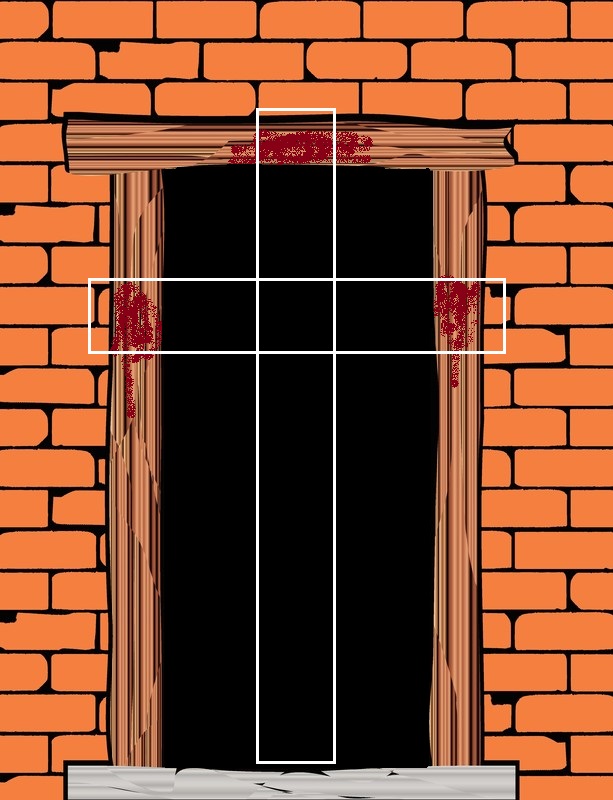
We need to understand some practical realities of that first Passover that also had a symbolic meaning. Many people have noticed something about the sprinkled blood. This picture shows where the blood was sprinkled, as commanded by God. When we impose a cross shape on that, we see that there is a match with the places where Jesus bled from, the nailed hands on the cross, and from the head where the crown of thorns cut into him and caused him to bleed.
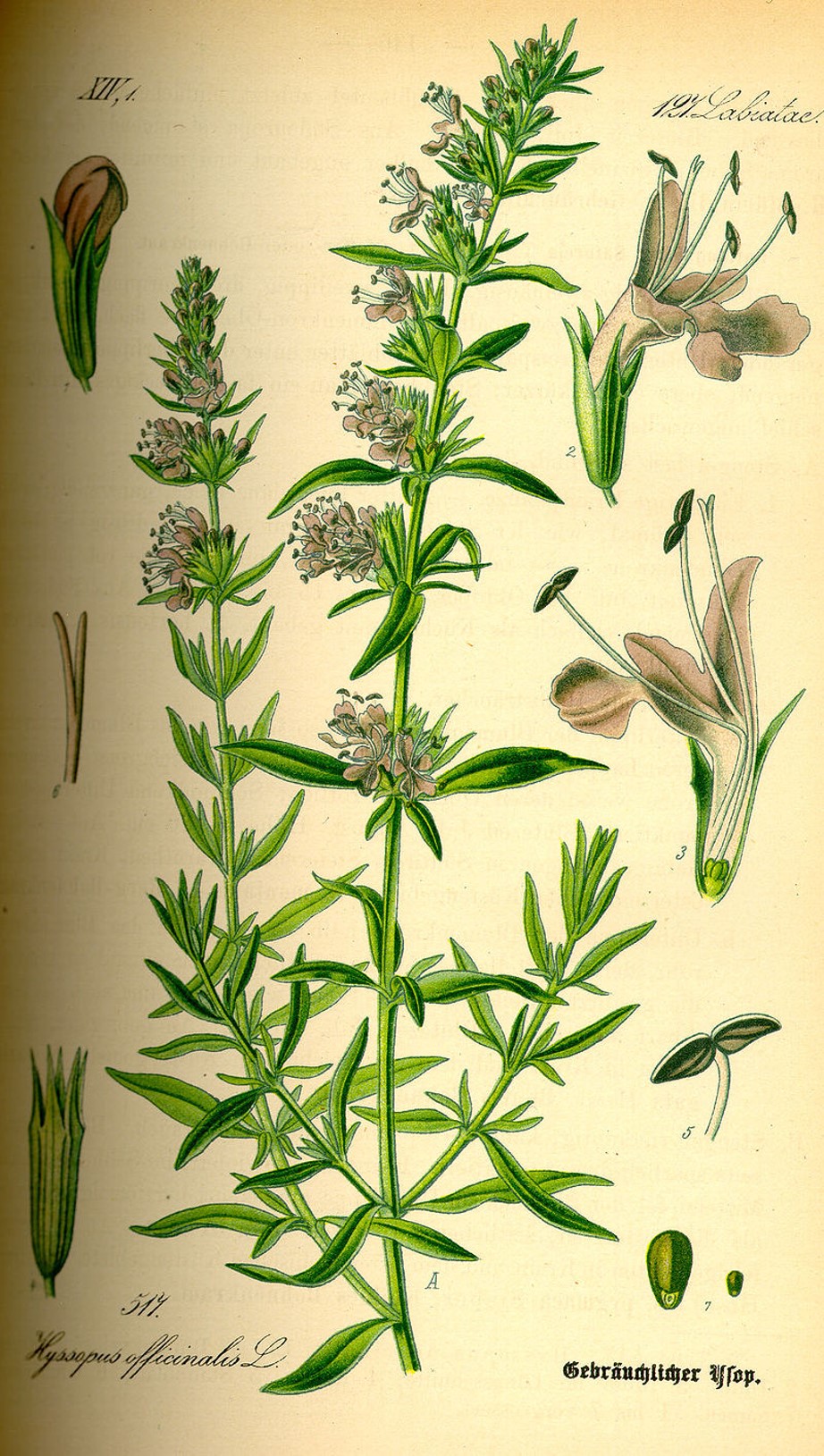
The other picture shows a Hyssop plant, which God commanded the Israelites to use to sprinkle the blood. It's a leafy plant. If you tried to use it as a paintbrush, it would make a mess. That's what you would expect to see from Jesus' blood on the cross.
The blood sprinkled on the lintel would drop on the ground, as Jesus' blood would have done.
It appears that the sprinkled blood was also a message about Jesus and how he was going to die.
Everything to do with Passover happens in the Hebrew month of Nisan. The dates below are days in that month.
| Exodus 12 Rule | Jesus' Fulfillment | |
|---|---|---|
| On the 10th of the month, choose the lamb | Jesus enters Jerusalem | |
| Unblemished year-old male | Sinless, male, in his prime | |
| Sheep or goat | Good or evil | |
| On the 14th, slaughter it between the two evenings | Jesus crucified | |
| Put some blood on the doorposts and lintels | Blood on the cross | |
| Eat it at night | ? | |
| Roasted by fire, not raw or boiled (entire lamb) | Tormented (like fire) | |
| Eat it with unleavened bread | The bread of life | |
| Eat it with bitter herbs | The bitterness to him | |
| Do not leave any to be eaten the next day | Off the cross by sunrise | |
| Do not break any bones | Bones not broken | |
It's redundant to say "Passover meal", but I'm going to say that anyway. I don't think everybody understands that Passover is just a meal. That's going to be important later.
This table breaks down the rules for Passover that are laid down in Exodus 12. Beside each is the symbolic fulfillment with Jesus.
On the 10th day of the month, the people are to choose their lamb for the Passover meal, that's Nisan 10. That is also the day that Jesus rides into Jerusalem on a donkey, and this is important, all of the people are cheering for him. They've all accepted him as their new leader, their new king.
The lamb they chose had to be a male, without blemish or defect. Jesus was a male and sinless. The lamb also had to be at least one year old, and not as old as two. A lamb of that age has reached its prime. At 33 years old, Jesus was also at his prime.
The lamb they chose could be a sheep or a goat. In the Bible, the word lamb just means young sheep or young goat. We tend to think of a lamb as being only a sheep, but the Bible has references to a lamb where it is referring to a lamb of a goat. Sheep usually stay close to the shepherd. That's their nature. Goats tend to wander away from the shepherd. This choice of sheep or goat seems to be a hint that some people would be calling Jesus good, and some people would be calling him evil. We know that was true of Jesus.
The Pharisees and the Priests, when they saw all the people cheering for Jesus as he entered Jerusalem, were afraid that they had lost everything. They determined the situation was desperate, and they had to get rid of Jesus, even if they did it on Passover.
The people's choice of Jesus will result in the priests sacrificing him as they did the Passover lambs that the people had chosen.
The Bible says the lamb needs to be slaughtered on the 14th, between two evenings. We know that was the day that Jesus was crucified. We don't know the exact time he was crucified, but it was early in the afternoon.
They had to put some of the blood from the slaughtering of the lamb on the doorpost and the lintel. I mentioned before that Jesus did that symbolically with his blood splattered on the cross, as we saw in that picture.
They had to eat the Passover in the dim light of the day. The Bible doesn't say it, but that means either after the sunset that begins Nisan 14 or before the sunset that ends Nisan 14. Jesus celebrated Passover with his disciples at the early time, but most people celebrated it at the later time, as they still do.
I do not know the reason for that requirement. Therefore I can't say how Jesus fulfilled it. That regulation does have the effect that most people celebrate Passover at the same time of day. Therefore it's possible for Jesus to be crucified at the same time most lambs were slaughtered and cooked.
The Bible also says the sacrificed lamb needs to be roasted by fire. It can't be raw, and it can't be boiled. The whole entire lamb is to be roasted by fire. The symbolism of fire in the Bible is torment. It is often associated with torment in the afterlife. Jesus fulfilled this with his torment on the cross.
They had to eat this meal with unleavened bread, which is bread made without yeast. Especially in the New Testament, yeast commonly (but not always) symbolized the spread of sin within a person. This instruction was to make sure the people at the table would be sinless. Served on the plate, this symbolized the sinlessness of Jesus. This also ties in with Jesus being the bread of life.
Another thing that is less commonly understood is that the meal needs to be eaten with bitter herbs. A bitter herb is some plant that you don't enjoy eating. You would eat it for other reasons than taste. The idea was that the people would eat a little of it, but as little as possible, and then push the rest of it to the edge of the plate.
The bitter herbs represent the bitterness of the mind. Bitterness is a little like yeast - it spreads. It spreads in a different way, though. If someone does something mean to you, that can make you bitter and cause you to do something mean to someone else. It passes from person to person, instead of spreading like yeast, which grows within something … or someone.
On the plate, it tells us of the bitterness of the people who caused Jesus to be on the cross. It also talks about Jesus on the cross. He tasted that bitterness, his unjust and unfair treatment, but rejected it, leaving it on the side of his "plate." So these bitter herbs are not a message that Jesus was bitter. It's a message that he wouldn't let himself be bitter, and we shouldn't be bitter either.
They were not to leave any of the meal to be eaten the next day. That really tells us that Jesus would be off the cross before the beginning of the next day, which was sunset. We know that happened and that it was a remarkable event. Crucified people usually took at least a couple of days to die. That would have resulted in Jesus and the other two being on their crosses for the feast days that began at sunset. The priests insisted this should not happen and that the legs of the three would be broken to hasten their deaths.
They were also required not to break any bones of the Passover lamb. I think most of us are aware of the symbolism in that one. The fulfillment of that came when they approached Jesus to break his legs, but they found that he was already dead. So they didn't bother. Therefore none of his bones were broken, and he was off the cross before the next day.
There is a prophecy that the Messiah's bones would not be broken. So that was fulfilled at the same time.
We see that all of God's requirements for the Passover meal were really talking about Jesus, his crucifixion, and his experience of it. Therefore the Passover meal was a prophecy of the future.
We now understand the first Passover. Next we'll look at the changes that have happened to it over time.
Right away, in Exodus 12, God goes about making his first change to it. With that first Passover, once they've eaten it, the next day, they're going to be freed to leave. They're going to be baking bread, packing up, and going. God says that, in the following years, they are to observe the Feast of Unleavened Bread. It is to begin the day after Passover. So it begins at evening, as most people are still eating their Passover meal. They are to eat unleavened bread for seven days.
There is to be no leaven in their houses. On the first day of that feast, they were to search the house to make sure there was no yeast in it, or products made from yeast. The symbolism here is not about Jesus but about God's people. There is to be no sin in them. Paul says this is still to be observed by Christians.
Because of this, let a man search his soul, and then eat of this bread and drink from this cup. 29. For whoever eats and drinks from it being unworthy, eats and drinks a guilty verdict into his soul for not distinguishing the body of the Lord Yahweh. (1 Corinthians 11:28-29)
Because there are many requirements for the Passover, including ones I haven't mentioned, the Jewish Passover is governed by a Seder, which is an ordered procedure for holding a Passover meal. The Seder is described in a book called the Haggadah. The first part of it discusses this requirement to remove the yeast from the house. This has become a game where someone, usually a woman of the house, hides 10 pieces of bread to be found. This confirms that the search was done. The Haggadah does not mention the deeper meaning of removing sin from the people.
God also said that the first and the seventh of the Feast of Unleavened Bread were to be Sabbath days. That is, days of rest. For the seventh-day Sabbath, you couldn't do any work, including not preparing food. On these feast Sabbaths, you couldn't do any work except preparing food.
The Passover meal flowed right into the Feast of Unleavened Bread because most people started the meal in the waning light as sunset approached, and sunset began a new day, the first day of the feast. By Jesus' time, because these two are side by side, the day of the Passover meal is considered the first day of an eight-day feast. There are references in the New Testament like "Feast of Passover," or "Passover is the first day of the Feast." It's easy to see how they came to think of it that way, but God said it's actually the Passover meal followed by a seven-day feast.
Another change happens, and this one isn't mentioned in the Bible. We can identify it by seeing what happens over time.
That blood that was required to be sprinkled on the doorpost and the lintels, for the first Passover, disappears from the Bible. It is never mentioned again. The word lintel is used three times in Exodus 12 and is never used again in the entire Old Testament. No one says it's going away, no one says you shouldn't do it anymore, or that you still should do it. Because of that, even Jews right now are a little unsure if they should do it. Some do and some don't.
We also see something appear that we didn't see mentioned before. Wine becomes a part of the Passover meal. The Seder not only requires it, but it becomes a key element. We'll see more about this a little later.
So we see that the blood on the doorposts and lintels vanishes, and wine becomes a required part of the Passover meal. Is there a connection? Yes, Jesus makes it when he says, "the wine is his blood." The blood on the doorposts and lintels symbolized his blood; the wine symbolized his blood.
We have to ask if those changes are due to the influence of men or the influence of God. Nothing in the Bible gives us a hint to think either way. It seems like too much of a coincidence to say that God was not involved.
The result of this, though, is that wine is going to be available at the Last Supper for Jesus to use as a symbol of his blood. He also uses that symbolism not as though its presence was a handy circumstance, but as though it was planned. Wine isn't the only symbol that seems like God may have put his finger on the scale. We'll talk about another one later.
If this is God's working, why is he doing it in this way? Why not just say it outright? I think there is a possible explanation. Alcohol can be a problem. I think you could certainly put together a good argument that this is God's way of allowing people to have a choice. Additionally, at the Last Supper, Jesus doesn't actually use the word "wine". He only says fruit of the vine. Therefore there is no requirement to drink wine for Passover. There isn't even an "if at all possible" statement that might encourage some who shouldn't. Most do because they don't have a problem. Children, alcoholics, Nazarites, and various other people who have a reason why they wouldn't drink wine can drink grape juice.
God makes another change. It looks like this probably happened within the first year that the Israelites were wandering in the wilderness. There's a change in where sacrifices to God can be done.
Then you shall say to them, "Anyone from the house of Israel, or from the strangers who reside among them, who offers a burnt offering or sacrifice, 9 and does not bring it to the doorway of the tent of meeting to offer it to the Lord, that person also shall be cut off from his people." (Leviticus 17:8-9)
By this time, the Tent of Meeting exists. We don't know when or how it came into existence. The priestly order and the tabernacle do not yet exist. With this new ruling, sacrifices must be brought to the Tent of Meeting. It isn't clear where they would be sacrificed. It will no longer be acceptable to make a sacrifice without bringing it to the Tent of Meeting.
This affects the Passover. For that original Passover, each household sacrificed its own lamb. They chose their own lambs, and they sacrificed them wherever they wanted. The Passover lamb will now be brought to the Tent of Meeting.
Once the tabernacle is finished, the sacrifices are going to be done there, and then later on, once they're in Israel and the temple is built, the sacrifices will be done there. God says, "Wherever I choose to put my name."
The consequence of this is that there would be periods of time when the people of Israel couldn't have offered legitimate sacrifices for Passover. One of those was during the Babylonian period. Remember, they were taken away from Israel, and the temple and the priesthood were destroyed. During that time, it wouldn't have been possible for them to sacrifice at the temple. Therefore it would not have been possible for them to sacrifice the Passover lamb in a way that was acceptable to God.
In 70 AD, the temple was destroyed again, and it has existed since. Therefore, it hasn't been possible to have a Passover lamb sacrificed at the temple, and therefore they don't do that. Yet they continue to observe the Passover, despite being in violation of God's instruction. Instead of lamb, they use chicken or sometimes something else. For some reason, a lamb shank bone must be present.
Judaism evolved to replace [sacrifices] with prayer and home-based ritual. […] It is considered better to neglect the positive commandment of sacrifice than to commit the sin of offering it in the wrong place. (Some AI answering the question: How do Jewish rabbis justify observing Passover without sacrificing a lamb?
This really means that Passover was too culturally important to the Jews to stop. So, instead of accepting that being unable to meet God's instructions indicated that God had rejected them, not for the first time, they chose to rank God's instructions as greater and lesser, and to break the lesser one.
Jesus Called it Passover
The night before Jesus was crucified, he ate dinner with his disciples. Jesus called that meal Passover.
And when it was time, Yeshua came and reclined and the twelve Apostles with him. 15 And he said to them, "I have greatly desired to eat this Passover with you before I suffer." (Luke 22:14-15)
He says that the meal that they're going to be eating is the Passover meal. He says, "Eat this Passover" because Passover is a meal. Because he's calling it Passover, it would have followed all of those requirements that we saw before. Those were his own requirements. He was the Word of God who gave those requirements written in the Bible.
He would have probably followed the practices of the time for that meal, that Seder that I talked about, that order of doing things at the meal. It would not have been exactly the same Seder as the Jews use today because they would have eaten lamb. It would have been similar because the modern Seder is based on the Biblical requirements, which would have been the same.
The purpose of the Seder was to have everybody do the same thing. If Jesus deviated from that, the disciples would have said something about it.
When you see Samuel's parents eating Passover in the Bible, before Samuel is even conceived, they eat it at the tabernacle. It was set up one last time after they had taken the promised land. Everyone eats the Passover together at the tabernacle. Because of that, there must have been an order to how they did things. Otherwise, if you joined a different table, you could find something completely different going on.
There is also a hint that there was some kind of order or procedure at Jesus' time.
But he said to them, "Go to the city to a certain man and say to him, 'Our Rabbi says, "My time is come. I will perform the Passover at your place with my disciples"'." (Matthew 26:18)
This translation uses the word "perform." The Greek uses the word "make," which isn't very clear. He's definitely saying that, as a Rabbi, he has a role to make it happen. In the modern Seder, there is also a person who makes sure that everybody does all the things in the right order.
There are four accounts that talk about what Jesus did at the Last Supper. We are going to look at all of them to lead us into more discussions about what exactly he's doing.
But as they ate, Yeshua took bread and blessed and broke and he gave to his disciples, and he said, "Take eat; this is my body." 27 And he took a cup, and he gave thanks and he gave to them, and he said, "Take, drink from it, all of you. 28 This is my blood of the new covenant, which is shed in exchange for the many for the release of sins. (Matthew 26:26-28)
And while they were eating, Yeshua took bread, and he blessed and he broke and he gave to them, and he said to them, "Take; this is my body." 23 And he took the cup, and he gave thanks and he blessed; and he gave to them and they all drank from it. 24 And he said to them, "This is my blood of the new covenant, which is shed in exchange for the many." (Mark 14:22-24)
And he took a cup, and he gave thanks and he said, "Take this and divide it among yourselves. 18 I say to you that I shall not drink from the fruit of the vine until the Kingdom of God shall come." 19 He took bread and he gave thanks, he broke and he gave to them and he said, "This is my body, which shall be given for the sake of your persons. You shall be doing this to commemorate me." 20 And thus also concerning the cup after they had dined, he said, "This cup is the new covenant in my blood, which shall be shed in your stead. (Luke 22:17-20)
For I have received from our Lord that thing which I handed to you, that our Lord Yeshua, in that night in which he was betrayed, took bread, 24 And he blessed and he broke and he said, "Take, eat; this is my body, which is broken for your persons; thus you shall do for my Memorial. 25 So after they had dined, he also gave the cup, and he said, "This cup is the new covenant in my blood. You shall be so doing every time that you drink for my Memorial." 26 For every time that you eat this bread and you drink this cup, you commemorate the death of Our Lord, until his coming. (1 Corinthians 11:23-26)
I've highlighted two different things that I want to look at. In yellow, I've highlighted the references to the order in which things were done. In blue, I've highlighted the references to what Jesus wants to happen in the future.
The modern church treats the bread and wine as though they were done together. If a meal is ever mentioned, it is treated as though it came before or after the bread and wine. What we see here directly contradicts that.
Matthew and Mark both say that Jesus blessed the bread after they had started eating. This wasn't a general blessing of all the food. It was a special blessing for the bread that they were about to share.
Mark describes the drinking of the cup immediately after the eating of the bread. It would be easy to think that they happened together. We need to remember that these are very shortened accounts of what happened. The only hope we have of understanding the order is to compare all of them.
Luke and Paul (in Corinthians) don't say anything about when the bread was eaten, but they both say the wine was drunk after the meal. Again there is a separate blessing which is only for the cup they are about to share.
Luke is a little different in that he has Jesus telling them to divide the cup among themselves before the bread and, later, drinking it.
Luke uses the phrase, "fruit of the vine." He is the only one to record Jesus saying anything about the contents of the cup. There are many other times when Jesus talks about wine. It's not that he's always avoiding the word. So it seems intentional for him to be saying "fruit of the vine" here.
It sounds like Paul has Jesus blessing the cup after the meal, but it doesn't say that. That comes from the ordering of the words. Paul's words, "He gave the cup," could easily be understood as "the cup he gave." Paul is speaking in the past tense for us, which makes it impossible to differentiate cases where he is speaking in Jesus' past.
By putting all of these accounts together, we can see this order:
The bread and the wine were integral to the meal. The disciples received the cup early in the meal but did not drink it until after the meal. This is consistent with the Jewish Seder, as far back as anyone can trace it. It calls for each person to have four cups at the beginning. It was a long meal. Each one is drunk at a particular point in the Seder. The last one is drunk after the meal.
Luke's account is the first of these to have Jesus say that this is something that we are to continue to do in the future. Matthew and Mark's accounts say nothing about that. Luke only speaks of the bread being a commemoration. Paul speaks of both being a commemoration. As I said, these are short accounts of a long meal. Leaving something out is not important.
We'll come back to this later
There's a very odd part of the Jewish Seder, and it has continued into the Messianic Christian version of the Seder as well. As I describe the kind of instructions for doing this step, think about it with your spiritual eyes and ears.
Before the meal starts, three sheets of square matzah are placed in the pockets of what is called an Echad, which means one. It is commonly made by folding a large napkin in half twice, which creates three compartments. Jews often have a custom-made one that they bring out for Passover. It has been sewn together to have three distinct pockets in it. Whichever way it is built, it is called the Afikomen, which is strangely a Greek word.
Three sheets of matzah are placed into these compartments or pockets. That's three in one, if you are paying attention.
During the meal, the middle sheet of matzah is removed and held up for everyone to see. Then it is broken in half. One half is placed back in the napkin, or the echad. The other half is wrapped in linen and hidden.
The children are sent to search for it, and the child who finds it is rewarded. Then one piece of it is given to everyone at the table - one piece from that half of the matzah.
It doesn't take much to see a description of the Father and the Son and the Holy Spirit, with the Son leaving that unity to be raised up and broken, and for his spirit to return to that unity, and for his body to become food for his children. That has a very Christian sound to it. The questions can't be avoided: "what is this doing in a Jewish Passover Seder, and how do they understand it?"
The truth is, they don't understand it. They don't know why they have that in their Seder. The practice goes too far back in history. The Jews have a written Seder from a thousand years ago, but not as far back as Jesus' time. The practice is there. They have two different theories about what this means in the Seder; neither one is satisfying to anybody. It's something they do.
Going back to Jesus' words in those four different accounts of that last Passover, we are going to ask what his intention is for the future. Our problem is that very little is recorded.
Bread: You shall be doing this to commemorate me - Luke
Bread: Thus you shall do for my Memorial - Paul
Wine: You shall be so doing every time that you drink for my Memorial - Paul
Both: Every time that you eat this bread and you drink this cup, you commemorate the death of
Our Lord - Paul
There are three different views about what he meant by those few words. There isn't even any agreement on how to parse those sentences.
Jesus uses two of the required elements of Passover to create a memorial for himself. He uses the unleavened bread that's on the table. Remember that unleavened bread was required for Passover from the very start by God. He also uses the fruit of the vine that is on his table. Apparently wine in Passover started out as blood on the doorposts and lintel. By Jesus' time, it had become a required part of Passover, but there's nothing in the Bible that says that the fruit of the vine had to be there. Jesus used it as one of his symbols.
The meaning of the unleavened bread at the first Passover was the body of the sinless Messiah. Jesus keeps that same meaning. The meaning of the blood at the first Passover was the sacrifice that purifies and thus protects. Jesus also keeps that meaning.
Until after Jesus' ascension, no one understood that Passover symbolized something, that all those things had a deeper meaning. Their viewpoint was: God said to do it, so we are going to do it. There were people who had said, God must have had a reason for specifying each of these things, but no one had really understood it to be a prophecy about the Messiah. The same was true for all of the feasts.
It seems, then, that Jesus is explaining the meaning that was always in the bread and the blood/wine. The meaning the Jews had never found.
Those two key elements from Passover are the ones that implied his death. So it makes sense that he would tell us to use those to remember his death.
What we see in Jesus' words is not something that's entirely new. It's built on the framework of Passover. The only change is that Passover as a prophecy is about to be fulfilled, and at least these two elements of it will become a memorial.
The question I want to explore next is: how did the apostles and the early church fathers understand what Jesus had said at the Last Supper?
The first one is Paul speaking to the Corinthian church, who had all kinds of problems in pretty much everything that they were doing. One of those was their handling of Passover.
But one or another eats his supper beforehand by himself (1 Corinthians 11:21)
The highlight shows that the Corinthian church is observing Passover as a meal. That isn't the problem. The problem is the disorder in the conduct of the meal. In part of the correction, Paul gives them words that most pastors use today in their Lord's Supper activity.
The word that's used for supper here in Greek is the word that means the main meal of the day. So this meal is not only a cracker and a thimble of wine.
Next we look at the Jerusalem Church from Acts and what they are doing.
And they were continuing in the teaching of the Apostles, and they became partakers in prayer and in breaking of the Eucharist (Acts 2:42)
Instead of "Eucharist", the Greek only has the word "bread". This loses the idea that the people were symbolically breaking the body of Jesus in order to eat it. Of course they were really breaking bread. The point here, though, is that the word Eucharist had come into common use because this is being done so often.
We see that this was something they did very frequently, and the apostles are not discouraging it. We expect drinking of wine to be a part of that, because this is the other element that Jesus set aside for remembering him.
Next we look at the Troas Church from Acts and what they are doing.
In the first day of the week, when we assembled to break the Eucharist, Paulus was speaking with them, because the next day he was going to go out by himself and he prolonged speaking until midnight. (Acts 20:7)
This is the story about the kid who's sitting in the window, falls asleep, and falls out the window. The point here is not that part of it, but the idea of breaking the Eucharist. This time, we know it is very close to Passover. We'll see that in the next verse. Even so they are breaking the Eucharist - only the bread and probably the wine.
Next we take a look at the apostle's time with that church in Troas.
Paul's team from Acts is observing Unleavened Bread[They] went before us and waited for us in Troas. 6 But we departed from Philippus, the city of Macedonia, after the days of unleavened bread, and we went by sea and came to Troas in five days and remained there seven days. (Acts 20:5-6)
Paul's team is out on one of his missionary journeys, and the Feast of Unleavened Bread comes up. Half of the team goes on to Troas, and half of the team stays behind. The reason isn't stated, but it makes sense that they want to split their team's presences for the feast between churches instead of only at one church.
They've chosen not to travel during that feast period, which would have allowed each of them to spend time at both churches. Because of the Sabbaths included in the feast, that's what people were supposed to do.
Plainly Paul and his team are still keeping the Feast of Unleavened Bread in their time, and they still value it, as do the churches.
We are going to look at some other references now. These are not biblical references. These are references to the writings of early church fathers. They were the leaders of the church at that time. I've mentioned Polycarp and Polycrates in other studies.
Polycarp was a man who actually worked with some of the apostles and knew how they did things. Because of this, his words were highly respected. For us, his testimony is very valuable.
In this quote, the story is that Polycarp has heard that the Roman church has decided to move the date of Passover. They've moved it to the Sunday following the Passover. This doesn't seem like a big change, but Polycarp feels it is important. He travels a great distance to get to Rome to tell them that they're doing wrong. He's also there to correct them on some other things that they're doing wrong.
At this point in the story, Polycarp has talked to Anicetus, who was the leader of the church in Rome at that time. Polycarp explained that they were doing wrong and that the apostles would never have done this. Anicetus said, "Well, this is how we do it, and we don't care."
And in this state of affairs they held fellowship with each other; and Anicetus conceded to Polycarp in the Church the celebration of the Eucharist, by way of showing him respect
So they didn't agree, but nonetheless they celebrated the Eucharist together. Obviously Polycarp hadn't timed his trip so he would be there at Passover, so this is another case where "breaking the Eucharist" is done at other times.
Polycrates lived about 40 years later, from 130 to 196 AD. This quote comes from a writing by another early church father, Irenaeus.
The back story here is that the Roman church has again changed the Passover date. This new date is completely independent of Nisan 14, the Passover date.
They've sent a letter to the Eastern churches saying, "You guys have to start doing it on our date, and we're not going to accept you doing it on the old date.
Polycrates, who is the leader of all of the Eastern churches, sent a letter back to the church of Rome. In it he lists all of the great people of faith who came before him in the Eastern church, including Polycarp, and he says:
All these observed the fourteenth day of the Passover according to the Gospel, deviating in no respect, but following the rule of faith. […] And my relatives always observed the day when the people put away the leaven.
He sees Passover observance as being a gospel thing, not some trivial thing whose date can be changed by man." He uses the word "Passover," not "Lord's Day." In fact, "Lord's Day" did not come into usage until long after the Bible was written.
He also talks about "putting away the leaven," which is a reference to the Feast of Unleavened Bread. He, and all the people before him, and all the people currently in the churches he managed, keep both Passover, on the 14th, and the Feast. His bigger point is that they are not going to change to suit the leader of the Roman church.
We've covered many matters here.
I've already covered this lightly, but I think it needs more detail.
The Roman Church started moving the Passover date around. First they moved it to the following Sunday. Polycarp said that was wrong, and they ignored his protests. The Eastern church would not change, and the two became divided over this. The Roman church had no ability to enforce the change on the Eastern church, so the matter stopped there. The Roman church kept observing Passover on Sunday.
About 40 years later, the Roman church created a brand new date system, and they moved Passover again. The purposes of this new system were to disconnect the date from God's Passover date and to place Resurrection Day on Sunday. Resurrection Day, which had been the Jewish Wave Sheaf offering day, becomes the new focus. This leaves Passover to become Good Friday, 2 days before Sunday, though it was three days before the Wave Sheaf offering.
Sunday is their favorite day, and they're moving everything to that day. Even Sabbath is moved to a Sunday.
Despite having changed the date and prioritized Resurrection Day instead, the Roman Church still calls this Passover. Literally, they call it the Paschal Feast.
So, they created this whole messed-up system, and they tried to sell it to the Eastern Church, which is a church that was trying to do as God desires. Polycrates and all of the Eastern bishops rejected their change. The Roman Church was very offended. They still don't have the power to enforce it, but they started building branches of the Roman church in the East. They began persecuting the people in the Eastern Church; eventually they drove the remnant out of Roman territory.
A couple of hundred years later, in 313 AD, that Roman date became the official date for all of Christianity, and that has continued up until our time.
The Roman church also covered its tracks by giving glorious new names to these days and by changing the Bible to suit.
Therefore when you come together it is not to eat the Lord's Supper (1 Corinthians 11:20)
I was in the Spirit on the Lord's Day, and I heard behind me a loud voice like the sound of a trumpet (Revelation 1:10)
In these two verses, we see something impossible.
These are the only two places in the Bible where "Lord's" is used. When we look at the writings of the leaders of the early church and the other significant people, we see these phrases, "Lord's Supper" and "Lord's Day," start coming into use, but the first use of them doesn't come until 420 AD. After that, it is seen more often. There's no writing that talks about the Lord's Supper or the Lord's Day until 420 AD.
How can it be in the Bible, if the phrase isn't used by anyone until 400 years after the bible is written? Also, if those phrases were in the Bible when it was written, people would have started using them 300 years earlier, but you don't see that. The answer is that the Greek Bible was changed. That might seem like a shockingly bold thing to do, but so is changing God's dates. If you can do one, you can do the other. After the Roman church changed the date for Passover and the day for the Sabbath, it seems they felt the need to justify those changes. So they gave names to the new days that they considered glorious.
All Greek manuscripts have these two phrases, but they aren't the only translations around. I use a translation that comes from the Aramaic Bible. That is the Bible that was used by the Eastern Church. They spoke Aramaic as their first language. That translation doesn't have these changes.
When therefore you assemble, it is not according to what is appropriate for the day of our Lord that you eat and drink. (1 Corinthians 11:20)
The "day of our Lord" is very different in meaning from "Lord's Supper." Paul is talking about the day to remember the death of our lord, which is what he asked us to do. The phrase "Lord's Supper" means "a meal eaten by our Lord."
And I was in the Spirit on the first day of the week, and I heard behind me a loud voice like a trumpet (Revelation 1:10)
The first day of the week is the day we call Sunday.
That's a little off topic. There is more that we can pull out of that change that relates directly to our topic. They call it supper. They could have given it any name they wanted, but they chose supper. This tells us that in 420 AD, the Passover observance was still a full meal. It wasn't just a little bit of matzah and a little bit of wine.
We're going to start jumping through a lot of history very quickly. There are a lot of changes that go on, all of which were led by the Roman church, which is now called the Roman Catholic Church, meaning the Roman Worldwide Church.
We don't have dates when all of these changes were made. The Roman Catholic Church didn't do a lot of talking about the changes they made, even less about why.
1. The Roman Catholic Church, the RCC, loses interest in the meal. They left it to each church to decide, or even each family to decide what they were going to do about Passover. That's still the way in our time. The church doesn't push Passover observance. There are some people in the Catholic Church who do something like Passover, but they do it on the Easter schedule. It's all entirely up to them. So, the meal disappears from the Catholic Church. The phrase Lord's Supper, which used to refer to a full meal, becomes a reference to the Eucharist. They become two words about the same thing.
2. Skipping in time again, around the 800s AD, the Roman Catholic Church decides that consecration, which is a prayer by a priest, converts the bread into the literal body of Jesus, and the wine into the literal blood of Jesus. It is named transubstantiation, and they still believe that idea. Though it started in the 800s, it was quite a while until that idea was fully accepted in the Catholic Church. It wasn't all that well-received by theologians in the church. Protestants don't accept that at all. We see the bread and wine as representing the body and the blood.
3. Later on, they decide that, once the bread and wine have been prayed over by a priest and consecrated, they contain the entire body, blood, soul, and divinity of Jesus. So that makes them redundant. Every benefit that you would get from one, you would get from the other. So there really isn't a reason to do both. As a result, most Catholics receive only the bread and not the wine. I believe it's traditional for the priest who's doing the ceremony to drink the wine. I understand it's an option that they can take, but most Catholics don't.
The Roman Catholic Church, in some of its writings, admits that part of the reason for this change was that spilled wine is harder to get out of the flooring than bread was. It might not be obvious what is being said there. Once the bread has been converted into the body of Jesus, if somebody drops it on the floor, you can just pick it up and dispose of it in some appropriate way. But if you spill wine, which is now literally the blood of Jesus, into the carpet or between the floorboards or tile, you're going to have a real hard time dealing with it.
4. The Protestant Reformation brought into existence new churches that rolled back some of the changes the RCC made, to varying degrees. The majority keep the date change of Passover, and they keep the idea that the "Lord's Supper" is a little bit of unleavened bread and a little bit of wine. They throw out the idea of transubstantiation and therefore the idea that the bread and wine are the same. Therefore their people take both the bread and the wine.
5. Modern liberalism infects the Protestant churches. They begin serving leavened bread and grape juice. I said above that there is no problem with grape juice, but eating leavened bread makes the statement that Jesus had sinned.
People have had trouble understanding what Paul means when he says, "Our Passover is the Messiah." It's not that hard to figure out when you look at the whole context.
In the context of these verses, Paul's point is about boasting. The church has been allowing some things that were wrong and boasting about them, and they shouldn't have been. The verses prior to these, if you want to look them up, will tell you more about what was going on. But Paul's message here is that their boasting is not good; that's how these verses start.
Your boasting is not good. Do you not know that a little yeast ferments the whole lump? 7 Purge out the old yeast from you that you would be a new lump, just as you are unleavened bread. Our Passover is the Messiah, who was slain for our sake. 8 Therefore let us make a feast, not with the old yeast, neither with the yeast which is in wickedness or of bitterness, but with the yeast of purity and of holiness. (1 Corinthians 5:6-8)
Paul uses a lot of Passover symbolism in these verses. We know that because he calls people unleavened bread. By now the reader understands Passover and the Feast of Unleavened Bread and is able to grasp what he says.
I've tried to explain what he's saying below by paraphrasing his words from those verses. That has the effect of simplifying them and reducing the symbolism. Here's that paraphrase.
Boasting is a yeast that will spread in you. Purge out that yeast so you will be a new lump of dough, becoming the unleavened bread of the Passover, as was our Messiah. Therefore, let us be a feast, not eating the yeast of your old lives, neither that of bitterness or wickedness, but with purity and holiness.
That's what he is saying. The verses aren't about Passover or the Messiah. Those are just part of the symbolism that Paul is using to make his point. Summarizing his point to the very minimum, he is saying that boasting will lead to other impurities. You must get it out of you.
Notice the word "bitterness" here. I've included that in the paraphrase as well. This is a reference to the bitter herbs that were to be served at the Passover. Paul has chosen to use Passover and the Feast of Unleavened Bread to talk about boasting and other things that spread in us, like yeast spreads in dough.
He says, our Messiah is the Passover. Yes, that's true. He was everything that was on the Passover plate and more. He was the blood on the doorposts and lintel, the lamb, the unleavened bread, and he rejected the bitter "herbs." He was the Passover.